Wetland Regulation & Permitting
Ramsey-Washington Metro Watershed District (RWMWD) regulates construction activities and land disturbance near or within wetland areas. Any project that may temporarily or permanently impact a wetland could require wetland investigation, a Wetland Conservation Act (WCA) decision, and/or a watershed grading permit application before any such impact takes place.
RWMWD administers the Wetland Conservation Act within the District’s boundaries except in the City of St. Paul. Please contact the City of St. Paul for WCA requirements for properties in St. Paul.
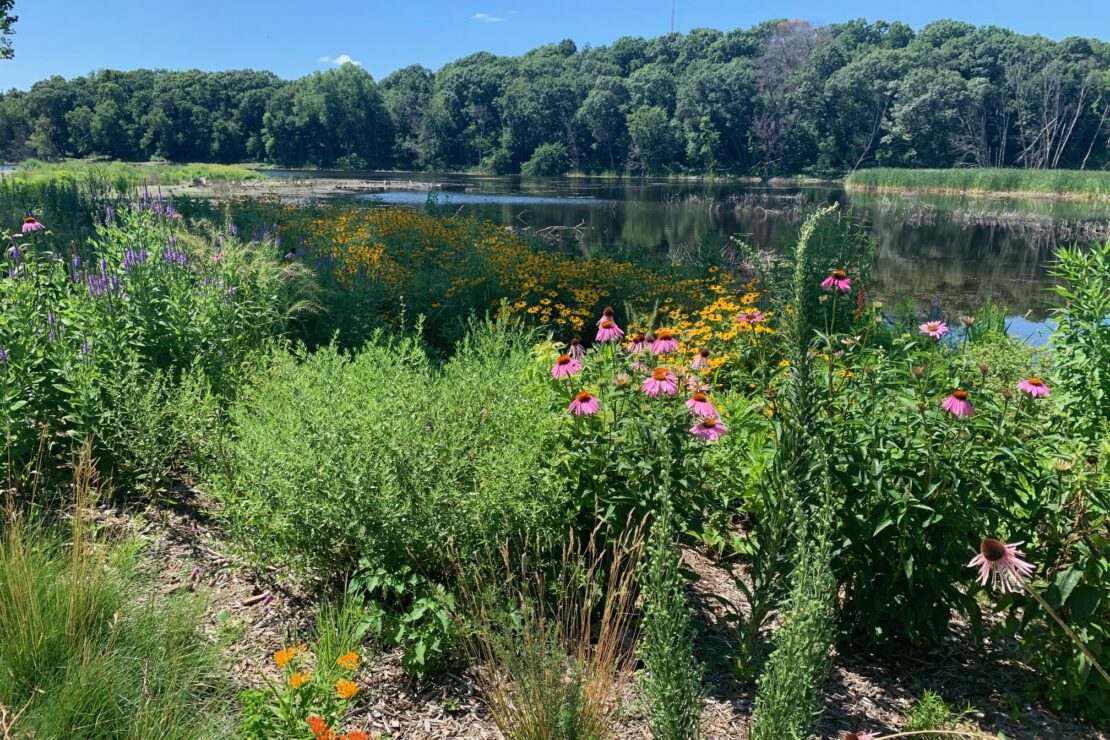

Ramsey-Washington Metro Watershed District (RWMWD) regulates construction activities and land disturbance near or within wetland areas. Any project that may temporarily or permanently impact a wetland could require wetland investigation, a Wetland Conservation Act (WCA) decision, and/or a watershed grading permit application before any such impact takes place.
RWMWD administers the Wetland Conservation Act within the District’s boundaries except in the City of St. Paul. Please contact the City of St. Paul for WCA requirements for properties in St. Paul.
Wetland Regulation and Permitting
To determine if your project is near a wetland, use our interactive wetland inventory map. Please note:
- This map does not represent all wetlands in the District.
- Wetland boundaries are approximate.
- A wetland delineation may be required for proposed development near a wetland.
Wetland Violations
The Ramsey-Washington Metro Watershed District investigates reports of potential wetland violations under the Wetland Conservation Act (WCA) and follows a structured process to ensure compliance.
If a violation is suspected, staff will assess the report, conduct a site investigation if necessary, and reach out to the property owner. Enforcement actions may be taken to restore impacted wetlands and maintain compliance with regulations.
For guidance on wetland regulations, permitting, or delineation requirements, see the Frequently Asked Questions (FAQ) below or contact Nicole Maras nicole.maras@rwmwd.org.
Frequently Asked Questions (FAQs):
- What is the Wetland Conservation Act (WCA), and why is it important?
The Wetland Conservation Act (WCA) is a Minnesota state law that regulates impacts to wetlands, with the overall goal of achieving no net loss of Minnesota’s remaining wetlands. Protecting wetlands is important because they provide a wide range of public values, including water quality protection, flood control, fish and wildlife habitat, education and recreation opportunities, and commercial benefits. Ramsey-Washington Metro Watershed District (RWMWD) is the local governmental unit (LGU) responsible for administering the Wetland Conservation Act within its District boundaries, except for properties located in the City of St. Paul. - What activities require a Wetland Conservation Act Application?
Activities like draining, filling, excavation and other alterations of wetlands require a Wetland Conservation Act application. If a project touches a wetland, changes the drainage of a wetland, or involves grading/filling near a wetland, assume a WCA application is needed unless otherwise stated by the LGU. You can always consult us before your project if you’re not sure. - How do I know if my project is near a wetland?
If you are unsure whether your project is located near a wetland, you may use our interactive wetland inventory map to view approximate boundaries. The MN DNR’s Wetland Finder is another helpful tool for identifying potential wetlands on your property. These resources are provided for reference only and may not depict all wetlands. A wetland delineation and/or additional permitting may still be required. Consult with us before your project if you’re not sure. - What is a wetland delineation, and when is it required?
A wetland delineation is an official determination of wetland boundaries and types, conducted by a certified professional. A delineation is conducted via a desktop analysis or more often through in-field sampling, and if approved the boundary is valid for 5 years for project planning purposes. A delineation may be required if there is proposed development near a wetland. Consult with us before your project if you’re not sure. - What documents do I need to submit with my WCA application?
A complete, signed, joint application is required for a WCA application submittal. Additional materials may be necessary depending on the type of application and scope of the project. See the resources below for additional guidance on application requirements. - Is there a fee for wetland applications?
Ramsey-Washington Metro Watershed District does not currently have fees associated with WCA application submittals. Other entities responsible for administering WCA may have different submittal requirements, so it is important to be aware of where your project is located. You can verify if you are within RWMWD’s district boundaries using this tool: Are You in the Watershed? – Ramsey-Washington Metro Watershed District - Who processes WCA applications in St, Paul?
The City of St. Paul processes all WCA applications within its city limits. Refer to the City of St. Paul’s website for WCA application submittal information. - How long does the WCA permitting process take?
The LGU responsible for administering WCA must make a complete application determination within 15 business days of receiving a signed joint application. Once an application is determined to be complete, the LGU has 60 days to provide a Notice of Decision on the application. Additional timeline requirements depend on the type of application submitted, and the LGU can extend the 60-day deadline upon written notice. - What should I do if I suspect a wetland violation?
If you suspect you have witnessed or encountered a wetland violation like unpermitted dumping, filling, or disturbance to vegetation, contact Kendra Kloth kendra.kloth@rwmwd.org or the general office office@rwmwd.org. It’s helpful if you leave your contact information for follow-up, but you can also remain anonymous by calling the general office line at 651-792-7950 or Kendra Kloth at 651-792-7957. Enforcement action may be taken to restore impacted wetlands and maintain compliance with local and state regulations.
Wetland Conservation Act Application
This application form is intended to be filled out by landowners, their hired consultants or representatives, and/or prospective landowners with permission to access the property for onsite review purposes.