
Snail Lake Regional Park Wetland Restoration
Over 150 native plant species have now been successfully established in the wetland buffer. Shoreline areas that were once eroding are now stabilized as the native plant cover grows and matures. The shore’s transitional zone now features a diverse collection of native wetland plants that can withstand significant water level changes. The park has become an even more popular destination for wildlife, native plant species, and serves as a great location for landscape photography and nature walks.
To increase public engagement and enjoyment of the restoration, we install plant identification signs every spring with QR codes that link to an online iNaturalist guide. This guide offers valuable information on how these plants can be incorporated into home landscapes. In the years ahead, park visitors will continue to experience a vibrant native plant community that supports a variety of pollinators and other wildlife.
Our natural resources team is committed to sustaining this restoration with the support of the community. If you are interested in helping with the vegetation management efforts, please contact us via email: office@rwmwd.org or call the office at 651 792-7950.
Overview
Vadnais-Snail Lake Regional Park in Shoreview is home to one of the largest natural areas in our District, featuring some of the extremely high-quality woodlands, open waters, and wetlands. However, over the past several decades, portions of the park have suffered habitat degradation due to flooding, erosion, the absence of natural fires, and invasive plant infestations. Given the park’s regional significance, we partnered with Ramsey County Parks and Recreation to secure grant funding for restoring 60 acres of wetland and surrounding uplands. Our District focused primarily on restoring the wetland buffer while Parks staff led the restoration of oak woodlands and savanna areas.
The wetland, located in the park’s southeast section, is a closed basin with no natural water outlet that can lead to significant fluctuations in water levels. This is an uncommon hydrology for wetlands in this region. One of our most important goals is to control invasive species and establish a more resilient wetland buffer capable of enduring these changing conditions. To achieve this, we have reintroduced diverse native plant communities adapted to thrive in this terrain. This native habitat not only supports a diversity of wildlife and pollinators but also offers visitors with year-round seasonal displays.
Project Goals
- Create and sustain a wetland buffer restoration to increase plant and wildlife diversity
- Use wetland buffer as a demonstration flood mitigation strategy for the community – something they can use in their own backyard
- Invasive plant management and preserve remnant oak forest
- Stabilize wetland shoreline and increase ground cover to reduce erosion
- Significantly reduce the cover and spread of invasive plant species
- Increase the number and types of native species
- Enhance scenery for park user
Contact
Work Completed
Between 2018 and 2021 an extensive restoration project was completed to turn an invasive-infested area in Snail Lake Regional Park into a diverse wetland habitat. Covering 60 acres of forest and 4,000 linear feet of wetland buffer, the project’s purpose was to restore biodiversity by removing invasive species, stabilizing eroded shorelines, and reintroducing native vegetation. This was a collaboration between the Ramsey-Washington Metro Watershed District and our longtime partners, Ramsey County. Funding support was from a $252,000 DNR Conservation Partners Legacy Grant.
A major aspect of the restoration was increasing plant diversity. After invasive species, like buckthorn, were removed, native species were selected and carefully planted to create a resilient ecosystem. Native seeds were sourced both from established restoration sites within the watershed and from local vendors to ensure high-quality and regionally appropriate plant material. These seeds were strategically spread during the winter months using a dormant seeding method. This uses the natural freeze-thaw cycles to jumpstart germination and establish a diverse native plant community in the spring.
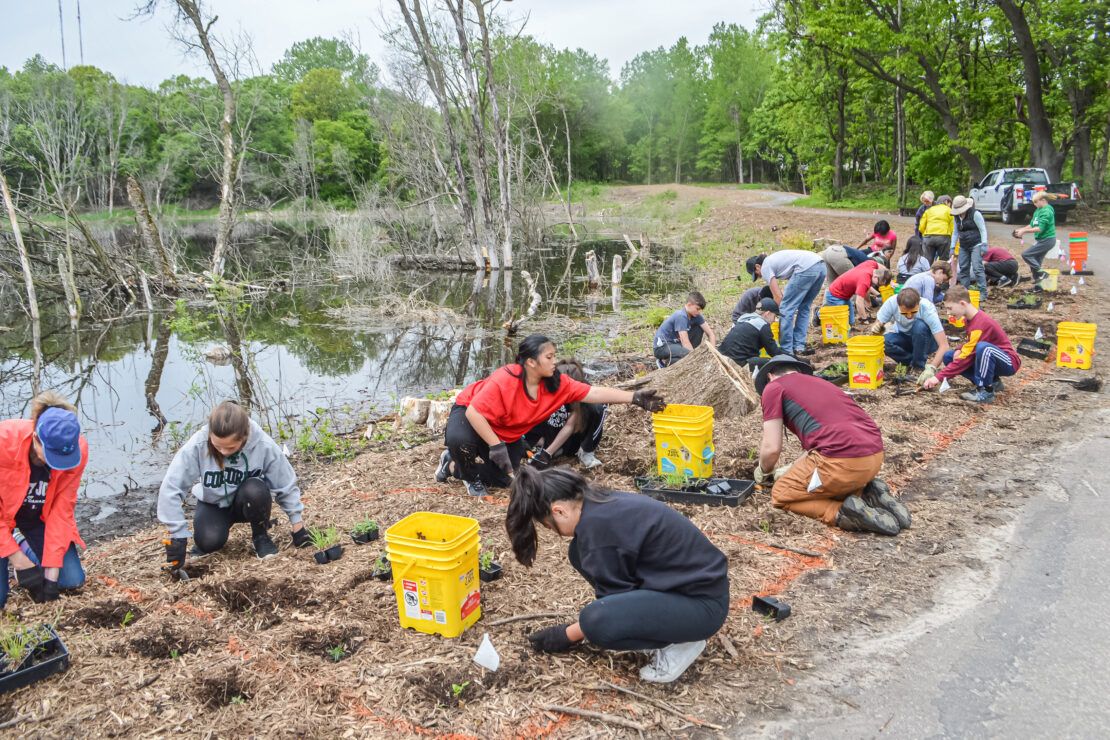
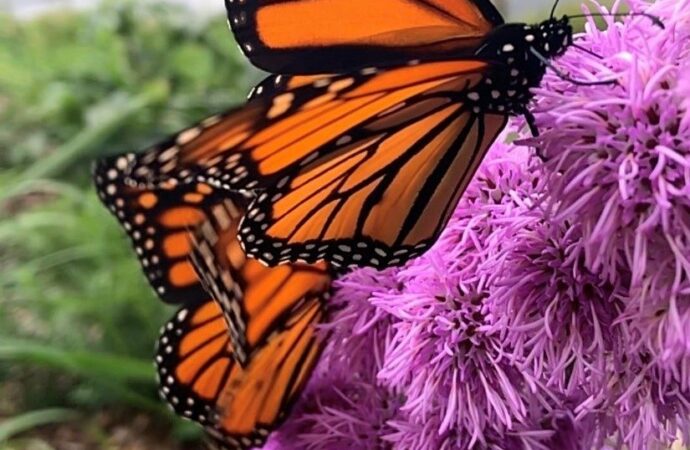
The newly restored areas now feature a high diversity of emergent, wet meadow, and upland plant species that provide critical habitat and food sources for pollinators, birds, and other wildlife. Many volunteers, including over 300 students, Master Water Stewards, the Citizen Advisory Committee, the LEAP Team, and 3M employees all played an important role in planting and watering these native species. Their efforts have resulted in a diverse and healthy habitat that you can see any time of year.
We used bioengineering techniques to protect these newly established plant communities in erosion-prone areas. Temporary fencing was installed to prevent muskrats and geese from feeding on growing vegetation. Additionally, ongoing monitoring and consistent management have been very important to control invasive regrowth and the long-term success of the restoration.
The restoration has significantly improved the park’s biodiversity and makes the wetland buffer more resilient to fluctuating water levels. We hope you can take the time to enjoy the wildlife and habitat around this wetland for many years to come.
Sorry, nothing found